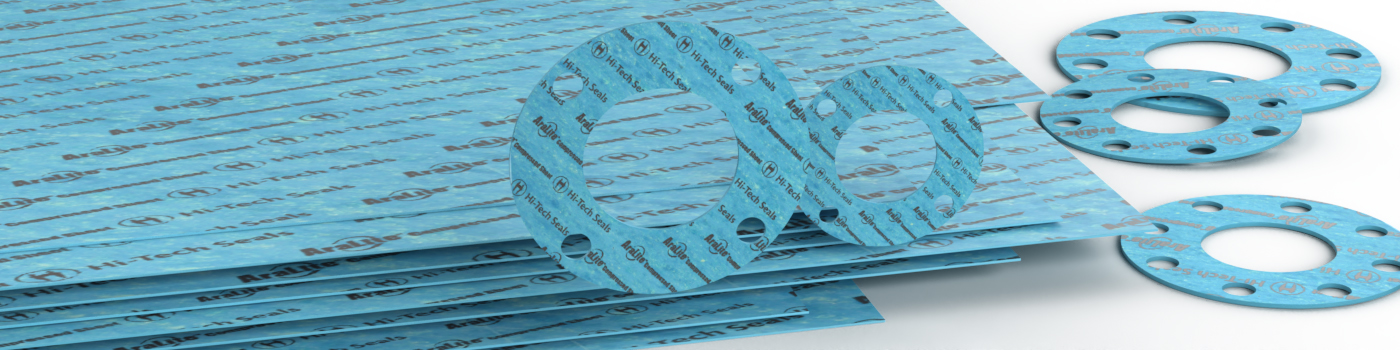

AraLite aramid compressed sheet gasket material for oil and gas by Hi-Tech Seals

AraLite™ Compressed Sheet Gasket Material

AraLite™ is Hi‑Tech Seals’ high‑quality, general‑purpose compressed non‑asbestos sheet gasket material, engineered for demanding industrial sealing applications. It is made from high‑strength aramid fibers and inorganic fillers, bonded with a nitrile (NBR) binder, which is a synthetic rubber with excellent resistance to oils, fuels, and many industrial fluids. AraLite™ delivers an outstanding combination of thermal, mechanical, and chemical resistance, making it a reliable, cost‑effective choice for engineers and maintenance teams in oil & gas, HVAC, and a wide range of industrial applications.

AraLite™ Key Material Specifications

The table below outlines key AraLite™ compressed non‑asbestos gasket sheet specifications to support quick material comparison. For more detailed technical information about AraLite™, please contact Hi‑Tech Seals.

SpecificationDetails
ColourBlue
CompositionAramid Fiber + Inorganic Fillers + Nitrile Binder
Thickness Range1/64″ to 1/4″
Operating Temperature °C (°F)-200 to 250 (-328 to 482)
Pressure Range psi (MPa)Vacuum to 1,450 (10)
Approvals and ComplianceABS, DVGW DIN 30653, SVGW DIN 3535-6, BAM (oxygen), EC 1935/2004, TZW W270, AGA AS 4623, DVGW DIN 3535-6, TA Luft (VDI 2440), DNV GL, ELL (hot), WRAS

AraLite™ Compressed Sheet Advantages

  • Excellent sealing capability
  • Good compressibility and recovery
  • Remarkable thermal resistance
  • Superior mechanical and chemical properties
  • Exceptional performance in contact with gas
  • Excels in a wide range of applications
  • Wide temperature range

Markets and Industries

  • General-Purpose
  • Oil & Gas
  • Treaters
  • Valves
  • Compressors and Pumps
  • Automotive
  • Heating Systems
  • Refrigeration and Cooling
  • Potable Water and Wastewater

AraLite™ Chemical Resistance Table

The table below summarizes the chemical resistance of AraLite™ compressed non‑asbestos gasket sheet and is provided as a general guide only to assist in selecting a suitable gasket material for industrial applications.

Recommended
Recommendation depends on operating conditions
Not recommended
Acetamide
Acetic acid, 10%
Acetic acid, 100% (Glacial)
Acetone
Acetonitrile
Acetylene (gas)
Acid chlorides
Acrylic acid
Acrylonitrile
Adipic acid
Air (gas)
Alcohols
Aldehydes
Alum
Aluminium acetate
Aluminium chlorate
Aluminium chloride
Aluminium sulfate
Amines
Ammonia (Gas)
Ammonium bicarbonate
Ammonium chloride
Ammonium hydroxide
Amyl acetate
Anhydrides
Aniline
Anisole
Argon (gas)
Asphalt
Barium chloride
Benzaldehyde
Benzene
Benzoic acid
Bio-diesel
Bio-ethanol
Black liquor
Borax
Boric acid
Butadiene (gas)
Butane (gas)
Butyl alcohol (Butanol)
Butyric acid
Calcium chloride
Calcium hydroxide
Carbon dioxide (gas)
Carbon monoxide (gas)
Castor oil
Cellosolve
Chlorine (dry)
Chlorine (in water)
Chlorine, <0.5% in water
Chlorobenzene
Chloroform
Chloroprene
Chlorosilanes
Chromic acid
Citric acid
Copper acetate
Copper sulfate
Creosote
Cresols (Cresylic acid)
Cyclohexane
Cyclohexanol
Cyclohexanone
Decalin
Dextrin
Dibenzyl ether
Dibutyl phthalate
Diesel oil
Diethyl ether
Dimethylacetamide (DMA)
Dimethylformamide (DMF)
Dioxane
Diphyl (Dowtherm A)
Esters
Ethane (Gas)
Ethers
Ethyl acetate
Ethyl alcohol (Ethanol)
Ethyl cellulose
Ethyl chloride (gas)
Ethylene (gas)
Ethylene glycol
Formaldehyde (Formalin)
Formamide
Formic acid, 10%
Formic acid, 85%
Formic acid, 100%
Freon-12 (R-12)
Freon-134a (R-134a)
Freon-22 (R-22)
Fruit juices
Fuel oil
Gasoline
Gelatin
Glycerine (Glycerol)
Glycols
Helium (gas)
Heptane
Hydraulic oil (Mineral)
Hydraulic oil (Glycol based)
Hydraulic oil (Phosphate ester-based)
Hydrazine
Hydrocarbons
Hydrochloric acid, 10%
Hydrochloric acid, 37%
Hydrofluoric acid, 10%
Hydrofluoric acid, 48%
Hydrogen (gas)
Iron sulfate
Isobutane (Gas)
Isooctane
Isoprene
Isopropyl alcohol (Isopropanol)
Kerosene
Ketones
Lactic acid
Lead acetate
Lead arsenate
Magnesium sulfate
Maleic acid
Malic acid
Methane (Gas)
Methyl alcohol (Methanol)
Methyl chloride (Gas)
Methyl ethyl ketone (MEK)
Methylene dichloride
Milk
Mineral oil type ASTM 1
Motor oil
N-Methylpyrrolidone (NMP)
Naphtha
Nitric acid, 10%
Nitric acid, 65%
Nitrobenzene
Nitrogen (Gas)
Nitrous gases (NOx)
Octane
Oils (Essential)
Oils (Vegetable)
Oleic acid
Oleum (Sulfuric acid, fuming)
Oxalic acid
Oxygen (gas)
Palmitic acid
Paraffin oil
Pentane
Perchloroethylene
Petroleum (Crude oil)
Phenol (Carbolic acid)
Phosphoric acid, 40%
Phosphoric acid, 85%
Phthalic acid
Potassium acetate
Potassium bicarbonate
Potassium carbonate
Potassium chloride
Potassium cyanide
Potassium dichromate
Potassium hydroxide
Potassium hydroxide, 20%, 80°C
Potassium iodide
Potassium nitrate
Potassium permanganate
Propane
Propylene (gas)
Pyridine
Salicylic acid
Seawater/brine
Silicones (oil/grease)
Soaps
Sodium aluminate
Sodium bicarbonate
Sodium bisulfite
Sodium carbonate
Sodium chloride
Sodium cyanide
Sodium hydroxide
Sodium hydroxide, 50%, rt
Sodium hypochlorite (Bleach)
Sodium silicate (Water glass)
Sodium sulfate
Sodium sulfide
Starch
Steam
Stearic acid
Styrene
Sugars
Sulfur
Sulfur dioxide (Gas)
Sulfuric acid, 10%
Sulfuric acid, 20%
Sulfuric acid, 98%
Sulfuryl chloride
Tar
Tartaric acid
Tetrahydrofuran (THF)
Titanium tetrachloride
Toluene
2,4-Toluenediisocyanate
Transformer oil (Mineral type)
Trichloroethylene
Vinegar
Vinyl chloride (gas)
Vinylidene chloride
Water
White spirits
Xylenes
Xylenol
Zinc sulfate