
Extrusion or Nibbling
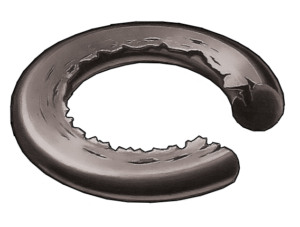
When extrusion or nibbling occurs, the seal develops ragged edges, which can leave it looking tattered. This generally appears on the low-pressure side. In general, extrusion failures are caused by one of more of the following factors:
|
|
|
|
|
|
|
Solutions to prevent extrusion include:
|
|
|
|
Over-Compression
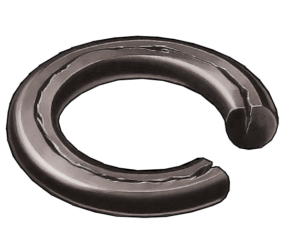
Over-compression causes mating surfaces to appear flat. It may also cause the flattened surfaces of the seal to develop circumferential splits. In general, over-compression failures are caused by one of more of the following factors:
|
|
|
One solution to prevent over-compression is to consider the material’s response to chemical and thermal environments during the gland design process.
Abrasion
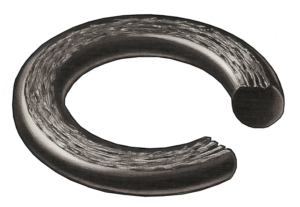
Abrasion generally happens in dynamic seals, subjected to reciprocating, oscillating or rotary motion. This failure causes laceration and breaking on the O-ring’s surface that experience excessive wear. Abrasion is caused by one or more of the following:
|
|
|
|
|
Solutions to prevent extrusion include:
|
|
|
Compression Set
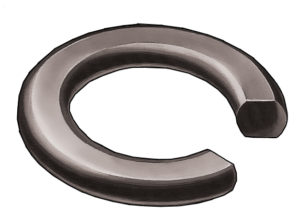
Compression set causes an O-ring’s cross section to lose its circular or O-shape and resemble a flat sided oval. The flat side corresponds to the mating seal surfaces.
Contributing factors may include one or more of the following:
|
|
|
|
|
Solutions to prevent compression set include:
|
|
|
Outgassing or Extraction
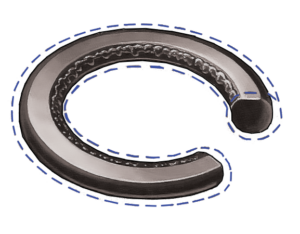
This failure is difficult to detect as the O-ring typically shows no visible change. In some instances, it may exhibit a decrease in cross-sectional size. In general, outgassing or extractions are caused by one of more of the following factors:
|
|
|
Solutions to prevent outgassing include:
|
|
Installation Damage
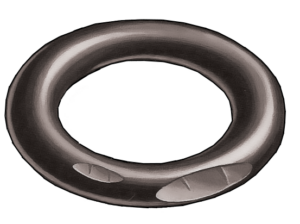
Damage that occurs to the O-ring during the installation process presents as small cuts, nicks, and gashes to the surface. Installation damage can be caused by one of more of the following factors:
|
|
|
|
Solutions to prevent installation damage include:
|
|
|
|
Chemical Degradation
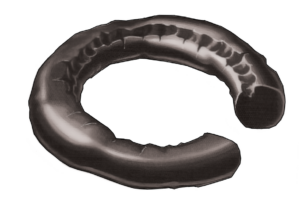
When chemical degradation occurs, the seal may exhibit signs including blisters, cracking, voids, or discoloration. In some cases, the degradation is observable only by measurement of physical properties. In general, chemical degradation is caused by:
|
To prevent this failure from happening, use a more chemical-resistant elastomer.
Thermal Degradation
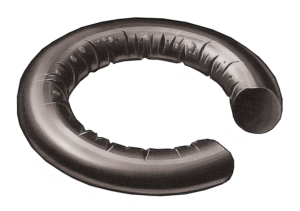
Thermal degradation may cause radial cracks to appear on the O-rings. They will be located on the highest temperature surfaces. In addition, certain elastomers may exhibit signs of softening or shiny surface as a result of excessive temperatures. In general, thermal degradation are caused by one of more of the following factors:
|
|
Solutions to prevent installation damage include:
|
|
Spiral Failure
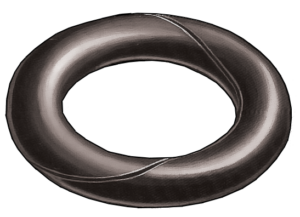
When a spiral failure occurs, a spiral pattern or mark appears on the circumference of the O-ring. Spiral failures are typically caused by one or more of these factors:
|
|
|
|
|
|
|
Solutions to prevent spiral failures include:
|
|
|
|
|
|
Plasma Degradation
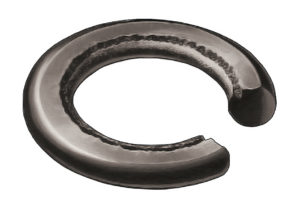
When plasma degradation occurs, there is erosion on the O-ring where it was exposed to the plasma. This type of failure generally happens in electrical applications. In some cases, this appears as discolouration or powdered residue on the surface. Contributing factors may include:
|
|
|
|
|
Solutions to prevent plasma degradation include:
|
|
|
Contamination
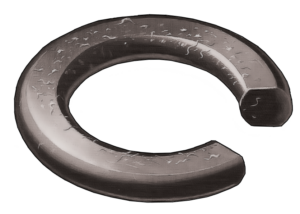
When this failure occurs, the foreign materials or contaminants are visible on the surface of the O-ring. In general, contamination is caused by:
|
|
|
To prevent this failure from happening specify contamination level including manufacturing and packaging of the seals.
Rapid Gas Decompression
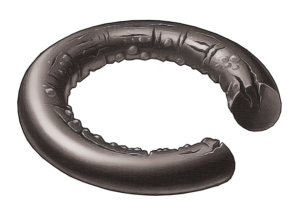
O-rings that have undergone rapid gas decompression (RGD) exhibit blisters, pits, or pockets on their surface. RGD occurs when there is absorption of gas at high pressure and the subsequent rapid decrease in pressure. The absorbed gas blisters and ruptures the elastomer surface as the pressure is rapidly removed. In general, rapid gas decompression is caused:
|
|
|
Solutions to prevent rapid gas decompression include:
|
|
|
|